
The short answer
- Surface material is the main factor: roof shingles, stucco and concrete call for different washing assessments at the property.
- Existing condition matters because cracks, loose finishes and worn wood influence the method your technician proposes on the spot.
- Surroundings matter because access, nearby furniture and adjoining outdoor areas need to be considered with the surface itself.
Washing Methods Follow the Surface
The surface and its condition determine which washing method your technician proposes. A home in Northeast Florida can have roof tile, painted stucco, screens, wood boards and concrete within the same request. The property assessment separates those surfaces rather than assigning the same approach to everything.
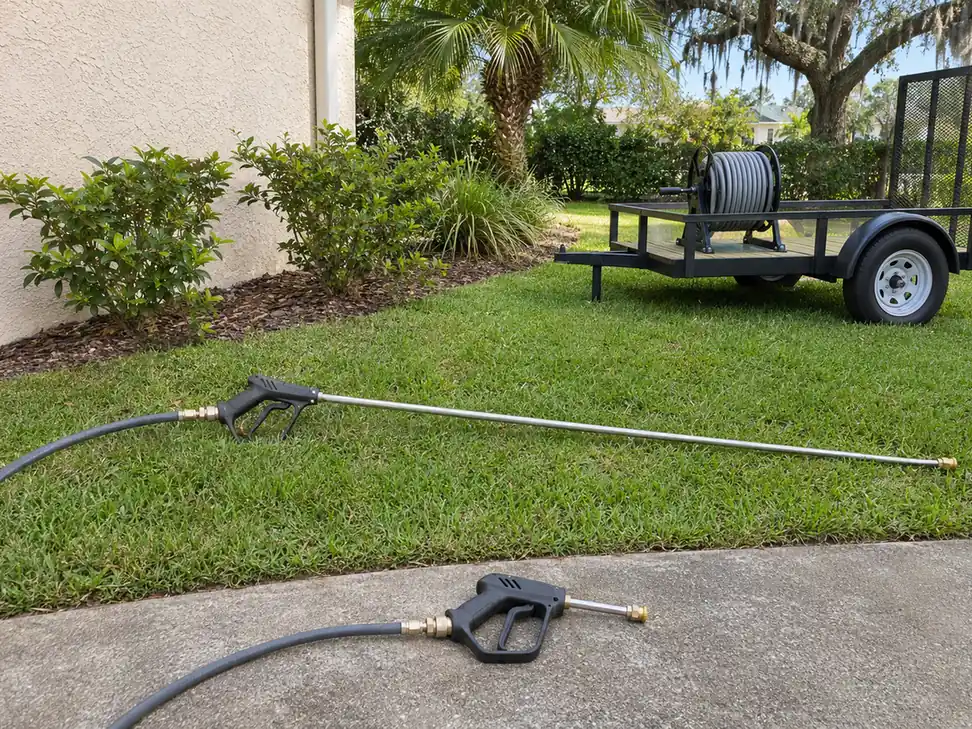
Soft washing uses low pressure and a cleaning mix; CDC cautions against combining household bleach with other cleaners or disinfectants. Pressure washing uses a high-pressure spray, often with a surface cleaner on flat concrete. Those descriptions distinguish methods without deciding what belongs on your particular roof, wall or patio.
Roof Shingles, Tile and the Gutter Line
Roof shingles and tile need an assessment on the spot, with a soft wash considered rather than assuming pavement equipment belongs on a roof. Your technician looks at the roof material and condition before proposing roof cleaning. Dark streaks alone do not establish the cause or the likely outcome.
The roof discussion also covers the gutter line, fascia and the areas beside the building. During the call or property walk, your technician explains which nearby plants or outdoor belongings need moving or covering for the work. The gutter assessment precedes the wall assessment so the upper surfaces form part of the same washing plan.
Stucco, Siding, Soffits and Screens
Stucco, siding and screens are surfaces where soft washing services may be considered after inspection. Soft washing a house still requires decisions about painted finishes, open joints, soffits and screen condition. Your technician assesses those details on the spot and explains how the proposed work differs between a wall and an enclosure.
Discuss potted plants, wall fixtures and furniture during the property walk. For a pool cage, the conversation includes the frame, screens, adjoining deck and pool equipment. The enclosure and the hard surface under it need separate method decisions even when they share a washing request.
Wood Decks, Docks and Pool Decks
Wood decks and docks need their own assessment because board condition and existing finishes affect the proposed method. Your technician discusses a soft wash or pressure wash after looking at the wood, including worn sections and coated boards. Furniture, dock belongings and access from the yard belong in that conversation.
At a waterfront property, nearby water and access from shore belong in the assessment with the dock boards. A pool deck also needs consideration of the pool edge and equipment. Your technician explains what needs moving or covering for the work and whether washing and any later sealing should be separate parts of the wood or pool-deck request.
Concrete, Walks and Paver Joints
Concrete often brings pressure washing into the plan, while pavers need consideration of joints and existing finishes as well as their faces. A surface cleaner may be proposed for flat concrete after the assessment. Oil spots, rust-colored marks and dark patches need inspection rather than a prediction that washing will remove them.
For properties in Jacksonville, FL, the city's stormwater guidance identifies industrial wastewater discharged to a storm sewer as illicit; discuss rinse-water handling with your technician as part of the pavement plan. Cars and other belongings are discussed during planning, including who will move them for the job. Whether to seal concrete or pavers afterwards is a separate scope decision.
For sites under St. Johns County's stormwater system, county guidance calls for blocking storm drains before building pressure washing and collecting the water for proper disposal. Your technician discusses the applicable site requirements during the property assessment.
Surface Choices at a Glance
Each surface needs an individual method assessment, even within a combined washing request.
| Surface | Method usually considered | Decision at the property |
|---|---|---|
| Roof shingles and tile | Soft wash | Roof material and condition |
| Stucco, siding and soffits | Soft wash | Finish condition and openings |
| Pool cages and screens | Lower-pressure approach | Frame and screen condition |
| Wood decks and docks | Method selected after inspection | Boards, coatings and surroundings |
| Concrete walks and drives | Pressure wash, often with a surface cleaner | Pavement condition and stains |
| Pavers | Surface-specific washing | Joints, existing finish and separate sealing scope |
Call about the roof, walls, outdoor living areas or pavement you want considered. One of our local pressure washing partners will walk through the surface choices with you at the property.