
The short answer
- Visible buildup and the surface's assessed condition are the main factors in deciding when a house needs washing.
- Moisture exposure and shaded areas are details to discuss when your technician evaluates recurring marks around the property.
- Surface material and existing finishes affect the cleaning assessment, so the roof, walls and paving need individual decisions.
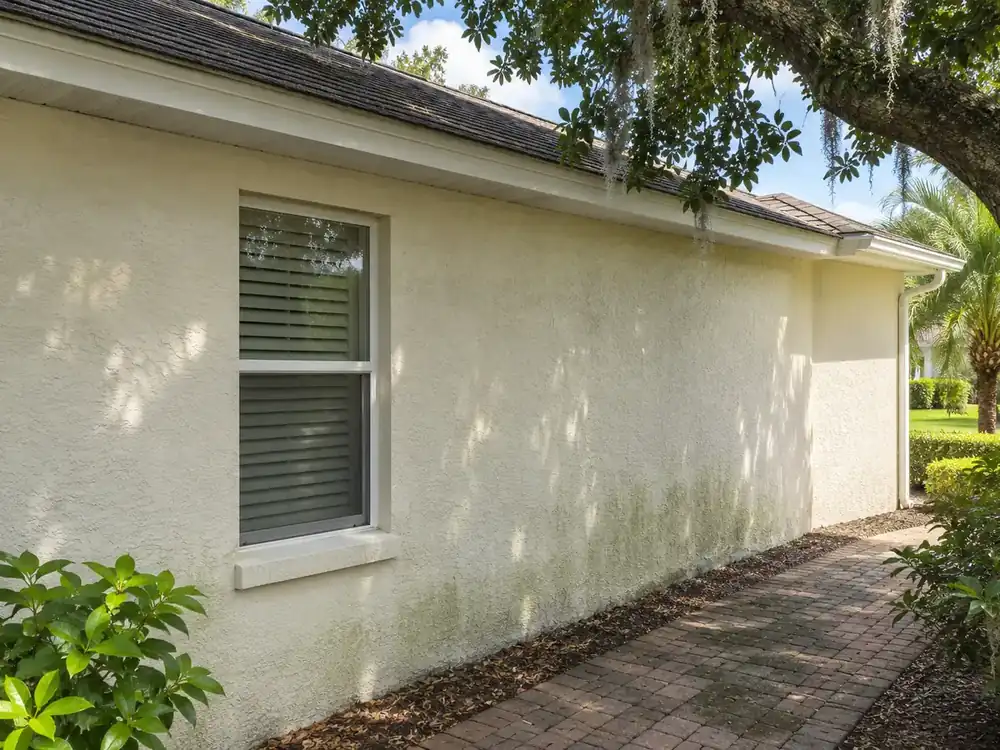
Moisture, Shade and Changes Around the Exterior
There is no single washing schedule for every Northeast Florida home. Your technician looks at the property and identifies which surfaces need attention. A calendar alone does not describe the roof's condition, a shaded wall or the paving beside a sprinkler. Call about the changes you notice, even when you do not know what caused them.
Roof Streaks and Gutter Debris
Roof marks need an assessment of the roof itself rather than a recurring appointment based only on appearance. Describe roof algae streaks or a roof mildew cleaning request in your own words; your technician assesses the condition on the spot. Those descriptions do not establish the type of growth or the appropriate method.
The roof discussion includes the material, shaded sections and places you have noticed staying damp after rain. Gutters, fascia and downspouts then need their own review. Mention leaves under a live oak and any visible overflow without climbing to investigate. Your technician discusses proposed soft washing, access and belongings or plants beneath the work.
Walls, Shade and Moisture
The north-facing wall and sections beneath tree cover are useful places to describe when explaining uneven buildup. Your technician compares the actual conditions around the house, including which walls you notice drying slowly after rain. Humidity and repeated wetting belong in that conversation alongside the wall finish and sprinkler exposure.
UF/IFAS Extension identifies moisture and a suitable growing surface as requirements for mold. Its discussion does not identify the marks on your exterior; your technician assesses those marks in person. A stucco algae cleaning request therefore starts with the wall's condition and setting, rather than a promise about what the wash will remove.
Describe the marks and siding material during the call, and your technician discusses soft washing versus pressure washing for that wall, along with plants, lights and screens around it. Neither the appearance of a patch nor its direction around the house selects the method by itself.
Decks, Docks and Damp Pool Cages
Outdoor living surfaces need attention according to their own condition, even when the house walls look different. Mention pool cage rails, screens or deck sections that you notice remaining damp. Your technician assesses the material and buildup, then discusses furniture, pool equipment, covers and access for the proposed wash.
Coastal exposure is another detail to share. UF/IFAS Extension Duval County's advice for new Jacksonville residents mentions salt spray near the beach in its discussion of plants; this is context for the technician, not a cleaning interval. Mentioning a home near the Beaches gives your technician context; proximity alone does not set a cleaning interval or diagnose a mark.
Driveways, Walks and Paver Marks
Ground-level buildup needs its own assessment of the material, marks and nearby sources. Describe sprinkler rust, pollen deposits, oil spots or brown leaf outlines separately. Your technician considers what you have observed rather than treating every discoloration as the same cleaning task.
The Miller Library explains that rain can rinse tannins from fallen leaves and leave traces on concrete, and notes that oak leaves contain substantial tannins. Brown marks beneath an oak are still assessed at the property; the explanation does not predict a cleaning result. Your technician also discusses whether sealing pavers, wood or concrete is part of the requested work.
| Surface | Buildup or condition to describe |
|---|---|
| Roof | Dark streaks or shaded damp sections |
| Gutters and fascia | Leaves, debris or exterior marks |
| Walls and soffits | Patches, pollen or sprinkler staining |
| Decks and pool cages | Damp areas or deposits on frames and screens |
| Driveways and pavers | Oil spots, leaf outlines or joint growth |
A Washing Plan Based on the Property
Pressure washing services should be discussed around the surfaces that need work and the observations behind the request. One of our local exterior cleaning partners will explain the proposed scope and price for your property before you authorize cleaning. The discussion includes preparation responsibilities and the access needed for each area.
The EPA identifies oil, dirt and chemicals among pollutants carried by stormwater runoff, so nearby beds, lawns, drains, pools and waterways belong in the property discussion. In Jacksonville, FL, the city also flags district water shortage restrictions affecting pressure washing. Call to discuss the work and applicable planning needs; no fixed interval replaces the assessment.