
The short answer
- The selected surfaces are the main preparation factor, so call to discuss the roof, walls and ground areas included.
- Access through gates and around plants, furniture and pool equipment is discussed with your technician while planning the wash.
- Household routines, including children, pets and vehicle access, help determine the arrangements agreed before the work starts.
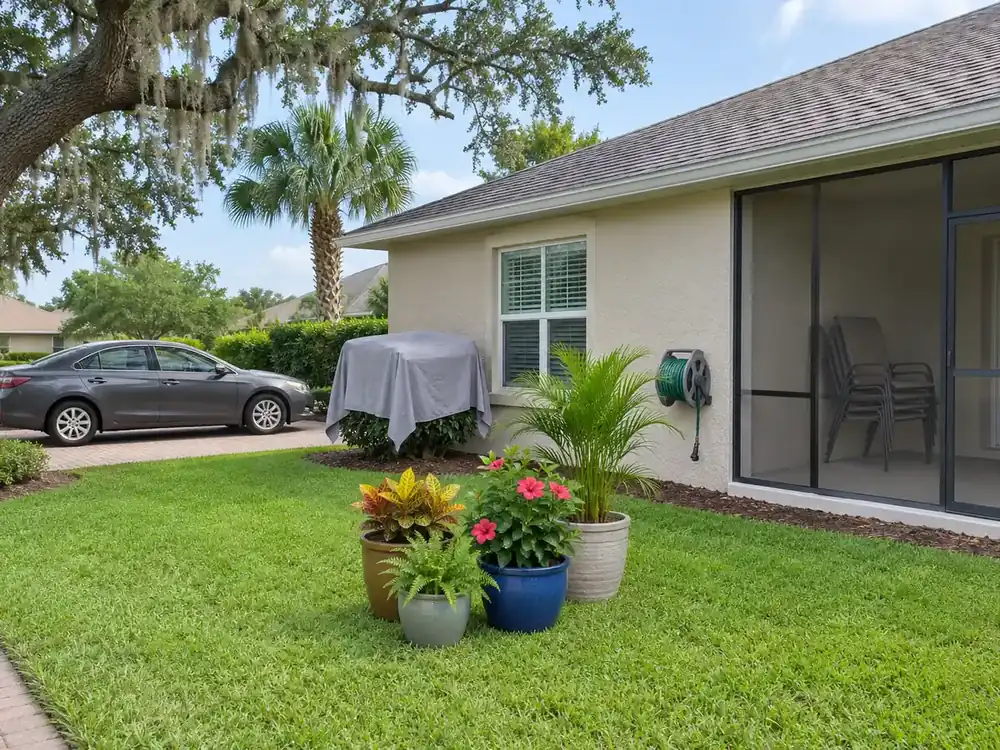
Access and Belongings Along the Wash Route
Preparing your property for pressure washing starts with a call about the surfaces and household needs. Your technician walks through the proposed work and explains preparation at the property. You can describe what you already know without measuring, shifting furniture or identifying every material to begin the conversation.
Roofline and Gutters
Roofline preparation centers on access and the objects beneath the proposed work. Your technician assesses the roof on the spot and explains the method under consideration, including any proposed soft wash. A roof request does not automatically include gutters, fascia or soffits, so the discussion names those surfaces individually.
The conversation also covers plantings under the eaves, hanging lights and belongings beside downspouts. Your technician explains which items need attention and who will handle them before washing starts. You describe any known leaks or damaged sections during the call; the roof assessment belongs at the property.
Walls, Soffits and Screens
Wall preparation depends on the finish, nearby belongings and access around the house. Your technician discusses soft washing or pressure washing for the actual siding or stucco. Plants close to the walls, pots on ledges, window screens and wall decorations all belong in that conversation.
Lights, outlets and other electrical fixtures need to be identified during the walk around the property. Describe loose fittings, damaged covers or existing problems you already know about. Your technician explains the arrangements for the cleaning work; you do not need to investigate unfamiliar fixtures to call.
If you are wondering what to use before pressure washing, discuss the surface with your technician rather than choosing a product yourself. The planning call is about the job and its surroundings, with material and condition assessed in person. For a comparison of methods, see soft washing versus pressure washing.
Decks, Docks and Pool Enclosures
Furniture, pool equipment and household access shape preparation around outdoor living areas. Your technician discusses where chairs, cushions, planters and toys belong during the work and agrees who will move them. Power washing furniture is a separate request from clearing furniture out of a deck-cleaning area; identify which work you mean.
For a pool cage, the discussion includes screens, frame condition, equipment and any existing pool cover. A dock adds questions about the route from the yard and belongings on the boards. Your technician assesses those surfaces and explains the approach rather than extending the wall-cleaning method to every material.
Children and pets also need arrangements for the work area. Your technician discusses keeping them indoors or clear of the washing route and identifies an access route for the household. Gates, latches and water supply are part of the same conversation, including any access needs you want considered.
Driveways, Walks and Pavers
Vehicle placement and access to doors are the main ground-level preparation decisions. What to move before pressure washing depends on the driveway, walks and patio sections included. Your technician talks through cars, portable furniture and other obstructions and agrees the arrangements before the work itself.
For pavers, wood and concrete, mention whether you also want to discuss sealing. Cleaning and added finishing need a clear scope, including any preparation responsibilities your technician identifies. The condition of paver joints and existing finishes is assessed at the property.
| Part of the property | Topic to discuss |
|---|---|
| Roofline and gutters | Access, plantings and belongings below |
| Walls and soffits | Finish, fixtures, screens and nearby pots |
| Decks and pool cages | Furniture, equipment, covers and household routes |
| Driveways and pavers | Vehicles, entry access and added sealing |
Water Access and Drainage Planning
Water access and nearby drainage features belong in the work discussion. The EPA explains that runoff crossing hard surfaces can pick up pollutants, making the location of lawns, beds, the drive, storm drains, a pool or a creek useful context for your technician. For work in St. Johns County, county guidance calls for blocking storm drains before pressure washing buildings or equipment and collecting the water for proper disposal.
In Jacksonville, FL, the city identifies pressure-washing restrictions associated with the district's water shortage declaration. Your call can include the water supply and proposed scope while your technician addresses applicable restrictions in planning the job.
One of our local service partners will go over the requested work and its price with you before washing begins. Agreeing on preparation responsibilities is part of that discussion, so the household knows what the plan involves.